

Filter by
Sort By

Agriculture
Solar energy has become the world's fastest-growing source of new electricity generation with annual global installations rising from 51.8 GW to 507.2 GW between 2015-2024, and are projected to surpass 1 Terawatt by 2030.[1]. This growth remains heavily concentrated in China, which accounts for most of the global manufacturing capacity across the value chain[3]. India has been a substantial beneficiary of Chinese solar manufacturing, but since 2021 India has pursued a deliberate industrial policy to build domestic manufacturing capability, decouple from Chinese sourcing and reduce its import dependence. This brief examines two developments that predicate on guidance for such a strategy viz. the June 2026 enforcement of Approved List of Models and Manufacturers (ALMM) List-II, mandating domestically manufactured solar cells, and the imposition of US countervailing duties of up to 126 percent on Indian solar exports in 2026 [2,18]. Given India’s market potential and technological capacity, it pre-assesses two scenarios for how China may respond to India's push to localise production upstream of module assembly and argues that comparatively plausible scenario — strategic price competition in cells rather than outright disengagement that has a documented precedence in India's own recent experience with module- dumping of selling PVs below production cost.
25 September, 2026

Financial Markets & Policy
Completing India’s transition to residence-based taxation of foreign portfolio investments, and achieving tax neutrality for resident financial savings
12 August, 2026

Macro & Public Finance
by Myra Agrawal, Vaibhav Jain, Rachit Kedia, Saanvi Magod, Vibhu Singh
When a government breaks its own fiscal rules to survive a crisis, what makes anyone believe it will go back? For most emerging and developing economies (EMDEs), the answer is: nothing does. Of the 54 EMDEs with an active escape clause heading into COVID-19, 81% had no legally binding path back to fiscal discipline, just a promise to eventually sort it out. This paper tests whether writing that promise into law actually matters. Using IMF Fiscal Rules Dataset coding locked in before the pandemic, we compare countries with a codified correction mechanism to those with one in name only, and find that codified countries clawed back 2.7 percentage points more of their primary balance from the COVID trough than otherwise-similar countries without one, while a mechanism with no specified return path buys nothing i.e. its effect is statistically indistinguishable from zero. The ad vantage doesn’t come from harsher post-crisis austerity, since expenditure, revenue, and debt adjustments show no effect, but from before the crisis hit: codified countries sim ply ran larger surpluses going in. A probit model adds a troubling wrinkle — codification tracks income, not need, so the countries least likely to write the rule down are the ones most exposed to the next shock.
15 May, 2026
Agriculture
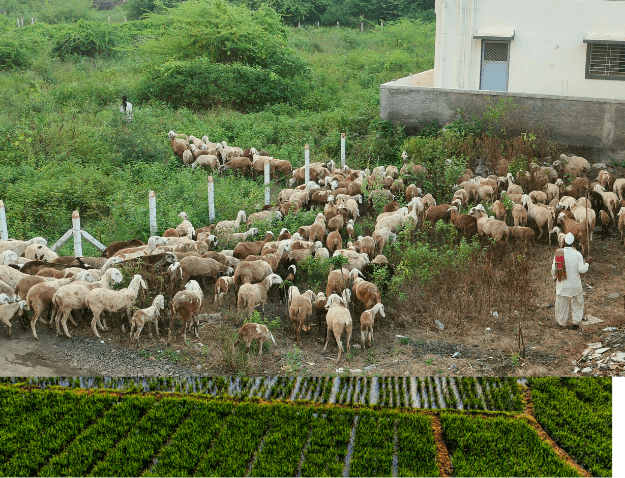
Given the relatively large share of employment in agriculture and allied activities, the sector remains central to India’s overall growth trajectory. Agriculture and allied activities continue to be a key source of livelihoods for a substantial proportion of the population and contribute significantly to national income and employment generation. Over the past decade, however, there has been considerable variation in the growth of agricultural and allied Gross State Domestic Product across states. Understanding the reasons behind these differences is particularly important in the context of structural transformation within the sector. While the key feature of economic development is a gradual employment shift towards manufacturing and services, this transition requires structural transformation within the agriculture and allied sectors, where higher-value allied activities such as livestock, fisheries, and horticulture play an increasingly important role (Negi et al, 2021). This note examines the growth performance of agriculture and allied activities across states over the last decade and a half and examines the contribution of sub-sectors to overall growth. The note goes on to discuss potential factors that may help explain why growth has been faster in some states than in others.
The analysis uses the State Domestic Product (SDP) series from 2011-12 to 2024-25, published by the Ministry of Statistics and Programme Implementation, Government of India. The sub-sectors are crop (agriculture), livestock, forestry, and fisheries. I compute annual growth rates using this series. In addition, I also calculate the contribution of each sub-sector to overall growth in agriculture and allied activities using the sub-sector SDP data. This note summarizes the cross-state growth experience over the past 14 years and decomposes aggregate agriculture and allied growth into sectoral drivers using a baseline-share weighted formula. Each sub-sector’s contribution is calculated as the product of its baseline share and its estimated growth rate. I use 2013 as the baseline year for sectoral decomposition. I group the northeastern states, i.e., Arunachal Pradesh, Assam, Manipur, Meghalaya, Mizoram, Nagaland, Sikkim, and Tripura, into a single composite category in the analysis.
I begin by documenting the well-established empirical fact that state-level growth in total domestic product is positively associated with growth in agriculture and allied activities. Despite the declining share of agriculture in aggregate output, the agriculture and allied sector continues to play a critical role in driving overall income growth across states. Figure 1 illustrates this positive relationship, showing that states experiencing faster growth in agriculture and allied domestic product also tend to record higher growth in overall state GDP. This pattern shows the continued importance of agricultural performance for overall economic growth at the state level.
Figure 1: Relationship between growth in total domestic product and growth in agriculture and allied activities across states

Notes: The figure presents the annual growth in total State Domestic Product and growth in sectoral Agriculture and Allied Gross State Domestic Product (GSDP) across states. Growth rates are computed as compound annual growth rates over the 14-year period from 2011–12 to 2024–25, using the State Domestic Product (SDP) series published by the Ministry of Statistics and Programme Implementation (MoSPI).
Figure 2: Growth in agriculture and allied State Domestic Product across states

Notes: Figure presents the average annual growth rate of Agriculture and Allied Gross State Domestic Product (GSDP) across states, measured at constant 2011–12 prices. Growth rates are computed for the 14 years from 2011-12 to 2024-25 using the State Domestic Product (SDP) series published by the Ministry of Statistics and Programme Implementation (MoSPI) and represent compound annual growth rates over the 14 years.
Figure 2 shows that there is substantial variation in the growth rates of agriculture and allied activities across states. While the all-India average is around 4 percent, states like Andhra Pradesh (7.7 percent), Madhya Pradesh (6.5 percent), Telangana (5.6 percent), and Assam (5.5 percent) turn out to be top performers with a relatively high growth in the range of about 5 to 8 percent per annum. Another group of states, such as Chhattisgarh, Karnataka, and Tamil Nadu, has experienced good growth of around 5 to 5.2 percent. A larger set of states has recorded moderate growth in the range of 3 to 5 per cent, including Gujarat, Odisha, Rajasthan, Uttar Pradesh, Maharashtra, Bihar, West Bengal, Jammu and Kashmir, Haryana, and Bihar. At the lower end, some states like Kerala, Uttarakhand, and the Northeastern states have exhibited negligible or low growth over the period, while Punjab (2.1 per cent) and a few other states have seen relatively muted growth.
Table 1: Sectoral contribution to agriculture and allied growth by states

Notes: The table presents the percentage contribution of individual sub-sectors to growth in Agriculture and Allied Gross State Domestic Product (GSDP) across states, along with the average growth rate of the Agriculture and Allied sector. All estimates are measured at constant 2011–12 prices. Growth rates are computed as compound annual growth rates over the 14 years from 2011–12 to 2024–25, using the State Domestic Product (SDP) series published by the Ministry of Statistics and Programme Implementation (MoSPI). Sub-sectoral contributions are calculated using a baseline-share weighted decomposition, wherein each sub-sector’s contribution is obtained as the product of its baseline share (2013) and the estimated growth rate. Northeastern states, i.e., Arunachal Pradesh, Assam, Manipur, Meghalaya, Mizoram, Nagaland, Sikkim, and Tripura, are grouped into a single composite category.
Table 1 reports the contributions of different sub-sectors to overall growth in the agriculture and allied sector. A key finding is that allied activities like livestock and fisheries have been an important contributor to growth in many states, and their contribution often exceeds the contribution from the crop sector. This aligns with the broader picture that diversification and high-value agriculture will become central to agricultural growth in the future (Birthal et al., 2014; Balaji et al., 2025). It is also consistent with the well documented shift in demand patterns where future growth in demand for agricultural commodities would be driven by high-value commodities such as milk and dairy products, meat, fish, eggs, fruits, and vegetables, rather than by cereals (Singh, 2025). Rising incomes, urbanization, and dietary diversification are therefore likely to amplify the role of livestock and fisheries as engines of agricultural growth, while the relative importance of food crops will continue to decline (Balaji et al, 2025).
A decomposition of growth shows that states with higher overall growth in agriculture and allied activities are also those where livestock and fisheries sectors have made a larger contribution to growth. Livestock has emerged as a particularly important driver of growth in top growing states like Andhra Pradesh, Telangana, Madhya Pradesh, and Rajasthan. The expansion of dairy and animal husbandry has provided a relatively stable source of income, contributing significantly to overall agricultural growth.
Fisheries and aquaculture, while geographically concentrated, have played an important role in some states. States like Andhra Pradesh, Assam, and Odisha, in particular, have recorded strong growth in agriculture and allied activities alongside a rapidly expanding fisheries sector. Despite employing a smaller share of the workforce, fisheries have contributed substantially to growth due to higher productivity and greater domestic and foreign demand.
Forestry has played an important role in some hill and north-eastern states. Forestry has contributed substantially in the Northeastern states, Himachal Pradesh, and Uttarakhand. This partly reflects the fact that these states have relatively large forest resources and therefore have a larger baseline share of forestry value-added in the total agriculture and allied sector.
Figure 2: Relationship between agriculture and allied growth and share of area under cereals

Notes: The figure presents the annual growth in Agriculture and Allied Gross State Domestic Product (GSDP) across states on the vertical axis, along with the proportion of cropped area under cereals in 2013 on the horizontal axis. The state of Kerala is excluded in this figure as an outlier because of its low area under cereals and negligible growth in Agriculture and Allied Gross State Domestic Product over the selected period. Growth rates are computed as compound annual growth rates over the 14-year period from 2011–12 to 2024–25, using the State Domestic Product (SDP) series published by the Ministry of Statistics and Programme Implementation (MoSPI).
In general, the contribution of the crop sector has been relatively modest across many states. Figure 2 reinforces this pattern, showing a negative association between agriculture and allied sector growth and the baseline (2013) share of cropped area under cereals. States with a higher degree of specialization in cereal cultivation tend to exhibit lower overall growth in agriculture and allied activities. This pattern is particularly evident in states with cereal-dominated systems, such as Punjab and Haryana, where crop-sector growth has remained low over the period. The persistence of cereal-centric production in these states is also associated with a relatively high dependence on public procurement mechanisms (Negi et al., 2021; Negi, 2025).
The exception is Madhya Pradesh, where relatively high growth in agriculture and allied activities (6.5 per cent) is largely accounted for by the crop sector. The pattern observed for Madhya Pradesh is consistent with evidence from the literature, which attributes this crop sector-led growth to factors such as expanded irrigation coverage (including canals and tube wells), improved availability of power, and relatively supportive procurement and market conditions (Gulati et al., 2017).
Taken together, these patterns suggest that states with a high concentration in cereal-centric cropping systems have experienced relatively slower growth, while diversification towards non-cereal crops and allied activities has been associated with stronger overall growth in agriculture and allied activities.
India’s agricultural growth has increasingly been associated with diversification away from staple cereals toward high-value sectors such as livestock, fisheries, and horticulture. This structural shift has been driven by rising incomes, rapid urbanization, and dietary change, along with supply-side investments and technological improvements in production, marketing, and value chains (Birthal et al., 2014; Birthal et al., 2020; Negi et al., 2021). The key observation is that states that have been able to expand allied sectors in line with their natural and geographical advantages have experienced faster growth. Prominent examples include forestry-led growth in hilly and northeastern states, as well as the expansion of fisheries and aquaculture in coastal states and those endowed with favorable water and marine resources.
In contrast, states where agricultural growth has historically been driven by the cereal sector have generally observed moderate or low growth and now face an increasing need to diversify into high-value crops and greater investment in the livestock sector. Livestock often complements the crop sector through the use of crop residues as feed and manure for soil fertility, while providing income flows. Therefore, livestock and animal husbandry are not merely a supplementary activity to agriculture but are central to enhancing rural incomes and reducing vulnerability, particularly for smallholders (Birthal & Negi, 2012).
States where fisheries have emerged as a major contributor tend to be those that have successfully scaled aquaculture, developed marketing and logistics infrastructure, and integrated with domestic and export markets. Evidence from Andhra Pradesh illustrates how aquaculture commercialization can add to growth in agriculture and allied value-added.
Finally, lower agriculture and allied growth in major agricultural states like Punjab and Haryana is consistent with the view that the rice-wheat production system faces severe constraints, particularly groundwater depletion and rising costs. The literature documents how procurement-linked cereal systems in north-west India have contributed to environmental stress, reinforcing the need for crop and activity diversification (Negi, 2025).
23 April, 2026

Macro & Public Finance
by Arnav Akhaury, Atin Mittal, Saksham Sarda, Dersh Vinod Savla, Sanah Tripathi
India’s cities are the driving force of the nation’s growth, places where innovation, opportunity, and economic energy thrive. Yet the local institutions meant to sustain these engines run on fumes. Urban Local Bodies (ULBs), the city governments at the heart of this momentum, are perpetually short of funds and struggle to keep pace with fast growing urban needs. Cities contribute to over 60% of India’s GDP (The World Bank, Urbanization in India). But all municipal bodies combined raise only around 0.6% of GDP in revenues (Reserve Bank of India, Report on Municipal Finances). By comparison, the central government mobilises 9.2% and state governments 14.6% (Reserve Bank of India, Report on Municipal Finances). This structural imbal ance leaves municipal bodies heavily dependent on outside support. In many cases, 30 to 40% of their income comes from irregular and conditional transfers from higher levels of government (Reserve Bank of India, Report on Municipal Finances). The consequences are visible in damaged roads, ageing water systems, and overcrowded housing. The World Bank estimates that bridging India’s urban infrastructure gap will require about 840 billion dollars over the next 15 years (The World Bank, Financing India’s Urban Infrastructure Needs), far be yond what grants alone can cover. This policy brief examines the persistent weaknesses in municipal finance within the Indian context while proposing a framework for urban fiscal strengthening. In order to ascertain an India-specific structure, we analyse the United States urban finance market and propose reforms that are tailored to India’s unique operational realities, emphasising mechanisms such as Special Purpose Vehicles (SPVs), Public Private Partnerships (PPPs), and ring-fenced revenue bonds. We conclude that the successful implementation of these instruments is predicated upon the establishment of firm governance structures. This, combined with fiscal innovation and improved fiduciary oversight, will develop institutions necessary for municipalities to access and utilise capital markets. Addressing this current deficiency will create a sustainable financial ecosystem capable of funding the future development and expansion of India’s urban centres.
01 April, 2026
Employment
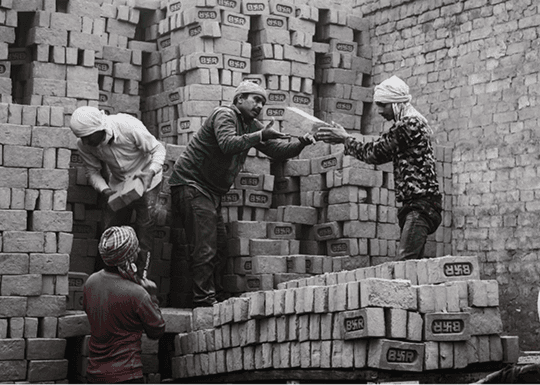
India has a labour problem: youth unemployment rates of about 10 percent, farm jobs still employing at least 40 percent of the workforce, and a need to create at least 8-10 million non-farm jobs annually to absorb the growing young population (Economic Survey, 2023). At the same time, the proportion of India’s workforce in manufacturing has stagnated at about 13 percent for the last three decades. What explains this stagnation?
After liberalisation, the relative price of capital goods fell sharply following trade liberalisation and import tariff cuts, while real wages rose more moderately. This resulted in a rising wage-to-rental price of capital (w/r) ratio and capital deepening. Indian firms now tend to use less labour per unit of capital than firms in other countries at similar income levels, especially in labour-intensive industries like apparel.
Commensurately, labour’s share of value added in India’s organised manufacturing declined from 28.5 per cent in 1980–81 to 11 per cent in 2012–13. While this mirrors the global pattern of falling relative prices of capital goods and capital deepening, India stands out in having unusually low labour intensity for a low-wage economy. Firm size in India remains small, with almost 80 percent of the non-farm workforce employed in firms with fewer than 10 workers. Even among registered manufacturing firms, the median firm size is around 20 workers.
India has long had a labyrinthine labour law regime—over 40 central and 100 state laws dealing with different aspects of wages, industrial disputes, safety and social security. In 2002, the Second National Commission on Labour had recommended consolidation of labour laws to reduce complexity and inconsistent definitions.
Finally, India’s four new labour codes, notified between 2019 and 2020 and brought into force from 21 November 2025, replace 29 central labour laws with a consolidated framework covering wages, industrial relations, social security and occupational safety. Importantly, the new codes attempt to balance the need for worker protection with ease of doing business.
Some crucial changes which aim to enhance worker welfare: a single definition of “wages” across laws, a national floor wage set by the Centre, minimum wage coverage extended from scheduled employments to all workers, common norms on working hours, safety, welfare facilities and registration for establishments, fixed-term employees (FTE’s) to now receive parity of wages and benefits with permanent workers, and appointment letters are now made mandatory for workers making it possible to track employment histories and nudging formalization. Finally, the codes provide for the creation of a Social Security Fund for unorganised, gig and platform workers. Aggregators (ride-hailing, food delivery, e-commerce, etc.) are required to contribute 1-2 percent of their annual turnover, capped at 5 percent of the amount they pay or owe to gig and platform workers.
Major changes which have reduced compliance costs for employers include: the applicability of standing orders and the requirement for government permission for employee layoffs increasing from 100 to 300 employees, a clearer framework for negotiating with unions, with minimum worker representation, and the removal of restrictions on women working at night or in certain occupations. There has been a substantial reduction in registrations, licences and returns. For example, the Occupational Safety, Health and Working Conditions Code has reduced registrations from 6 to 1, licences from 4 to 1, and returns from 21 to 1; the Code on Wages has reduced forms from 20 to 6 and registers from 24 to 2; and the Industrial Relations Code has reduced forms from 37 to 18 and registers from 3 to 0. Though they still fall short of one registration and one return benchmark for all labour related matters.
Most importantly, there has been decriminalisation of minor offences, with fines and improvement notices replacing prosecution. Size-based regulatory thresholds (10, 20, 50, 100 workers) often triggered additional regulations and inspections and were strongly associated with bribe seeking by inspectors. The new web-based random inspections can further reduce compliance costs for firms. However, serious, repeated or critical breaches are still imprisonable offences.
Evidence over the last two decades has repeatedly underscored that India’s manufacturing growth has been stymied by its extensive labour regulations. Evidence shows that states with more flexible labour regulations have higher output, employment, investment and productivity growth in manufacturing, especially in labour intensive industries. In fact, product-market liberalisation increased productivity in states with more flexible labour laws but had little effect in rigid states, implying that labour regulation constrained firms’ ability to respond to new opportunities. Estimates show that regulations under the Factories Act increase firms’ unit labour costs by almost 35%.
More recently, our research shows that amendments that raised Industrial Disputes Act and Factories Act thresholds from 100 to 300 workers, and 10 to 20 and 20 to 40 workers, along with decriminalization of offences in some states over the last decade (also some major changes implemented in the new codes), increased plant employment and output by 5 percent in states which amended these laws relative to the others. Overall, there is sufficient evidence to show that rigid employment protection legislation and complex labour regulations have depressed firm growth and job creation in India’s organised manufacturing.
First, the change that has provoked the strongest backlash from labour unions is the increase in the threshold from 100 to 300 workers for requiring government permission to lay off workers. This is due to fears of employment losses. However, notably, about 15 states, including some large ones like Rajasthan, Madhya Pradesh, Uttar Pradesh, Maharashtra, Andhra Pradesh and Gujarat, had already amended their Industrial Disputes Acts over the last decade (some spurred after the pandemic) and increased the threshold beforehand.
Thus, the effect of this change on manufacturing employment will be marginal in most states. In fact, by spurring firm growth and entry, there will be a net creation of jobs rather than job losses. When separation is costly or unpredictable, firms choose capital-intensive technologies to avoid adjustment risk, even in labour-abundant economies. By making separations more predictable and less binding at lower levels of employment, the codes can reduce the option value of staying small and capital-intensive.
Second, complex regulation and high firing costs act like a tax on labour, raising its effective price relative to capital. Relaxing these, by simplifying compliance and through decriminalization, digital registration, and unified returns, reduces the effective wage component. This makes labour relatively more attractive at the margin than capital. It also reduces harassment, transaction and compliance costs for most firms. Reduction of legal uncertainty can also increase private investment. However, the culture of corruption by officials and harassment of firms needs to change on ground for effective realization of gains. Third, requiring FTEs to receive equal pay and benefits as permanent workers, may reduce the incentive to rely excessively on third-party contractors. However, hiring contractual workers may solve a deeper problem e.g. specialization in core business tasks, training, recruitment etc than simply avoiding regulations and to that extent may have a limited effect.
While the above changes make important leaps, some of the provisions carried forward may still make manufacturing in India less attractive than our Asian competitors. For instance, overtime is fixed at twice the nominal wage. The standard overtime rate is typically 1.5 times the regular wage rate across most countries. The ceiling on the number of hours at 48 hours per week for a worker also makes labour more expensive, especially for industries which may experience seasonal demand. China legally sets 44 hours but often sees long hours. Similarly, Vietnam has a 48-hour limit but allows significant overtime (up to 300 hours per year) at a lower wage premium.
To bring some cheer, overtime capped at 75 hours a quarter has now been left to the discretion of states. Since 2020, some states like Haryana, Himachal Pradesh, Karnataka, Maharashtra, Odisha, Punjab, and Uttar Pradesh have increased the ceiling of overtime hours up to 144 hours per quarter. This potentially increases earnings for employees but high over time rates may still deter firms from employing labour beyond the usual 8-hours.
Second, a common national minimum wage floor in India—-generally considered a good idea for ensuring basic income security and reducing inequality—-can increase cost of labour in some states (especially the ones which already have a small non-farm sector). In India, the cost of living varies significantly between urban and rural areas, and across different states. A single, uniform national rate, even as a floor (unless taken as the minimum across the states currently) may be problematic given the large economic disparities.
Lastly, even if the new codes work as intended, manufacturing investment decisions depend on a broader package: logistics, power and infrastructure costs relative to peers, trade policy,export ecosystem, skilled labour, contract enforcement and importantly, land availability with little delays.
Comparative analyses of India’s manufacturing under-performance emphasise that while labour regulation is important, it is only one among several constraints. While the new labour codes improve India’s attractiveness for manufacturing investors at the margin, they are unlikely to be a silver bullet. Their impact will be realised only if accompanied by complementary reforms and credible implementation at the state level.
09 December, 2025
Subscribe to our newsletter
Subscribe to our newsletter
©2024-25 Isaac Centre for Public Policy