Macro & Public Finance • Working Paper
by Dr. Prachi Mishra, Daniel Leigh, Olivier Blanchard
29 September, 2026

International Trade • Research Project
by Dr. Vijay Singh Chauhan, Prashant Narang, Aryan Pandey
05 August, 2026

Macro & Public Finance • Research Project
by Dr. Prachi Mishra, Raghuram Rajan, Freddy Pinzon-Puerto, Katharina Bergant
19 February, 2026
Macro & Public Finance • Working Paper
by Dr. Prachi Mishra, Shohan Mukherjee, N.K. Singh
30 January, 2026
Filter by
Macro & Public Finance • Working Paper
by Dr. Prachi Mishra, Daniel Leigh, Olivier Blanchard
We look at the effects of debt and primary fiscal balances on sovereign credit ratings through the lens of a simple model. We find that the ratings differ from the implications of the model in three important ways. They give much more weight to debt relative to forecast primary balances. They understate the effects of the difference between the interest rate and the growth rate. They give a very large role to country effects. For the same level of debt and forecast primary balances, they imply extremely different ratings across countries, and imply extremely different levels of debt needed to reach a given rating.
29 September, 2026
International Trade • Research Project
by Dr. Vijay Singh Chauhan, Prashant Narang, Aryan Pandey
This paper evaluates whether India’s Customs Authority for Advance Rulings (CAARs) delivers the legal certainty and predictability required of an advance ruling regime under Article 3 of the WTO Trade Facilitation Agreement (TFA). An analysis of CAAR decisions issued between January 2021 and December 2024 shows that fewer than 53% of rulings are delivered within the statutory three-month time frame prescribed under Indian customs law. Delays are structurally embedded in CAAR’s operating model, driven by sequential decision-making, mandatory reliance on port-level commissioner inputs, and the absence of dedicated in-house technical expertise. CAAR’s under-performance is best understood as a design failure, not a capacity constraint: port-specific applicability and a three-year validity limit undermine the very certainty that advance rulings are meant to provide, even where individual officers act diligently. The policy implications are immediate: CAAR requires a dedicated internal technical unit, explicit confirmation of nationwide binding effect, and a reassessment, if not removal of the three-year validity restriction. Treating CAAR’s shortcomings as a design flaw rather than a staffing deficit is essential to restoring confidence in advance rulings as a trade facilitation tool, aligning India’s practice with Article 3 of the TFA, and protecting legitimate reliance interests of traders and investors.
05 August, 2026
Macro & Public Finance • Research Project
by Dr. Prachi Mishra, Raghuram Rajan, Freddy Pinzon-Puerto, Katharina Bergant
We study how U.S. monetary policy shocks transmit to cross-border merger and acquisition (M&A) activity. Using country- and firm-level data, tighter U.S. policy is shown to reduce both the value and the number of cross-border deals. The effects are especially pronounced for acquirer firms with larger foreign-currency liabilities, consistent with a net worth channel. Reflecting agency motives for acquisitions, deals announced under more accommodative U.S. conditions underperform ex post, indicating potential capital misallocation.
19 February, 2026
Macro & Public Finance • Working Paper
by Dr. Prachi Mishra, Shohan Mukherjee, N.K. Singh
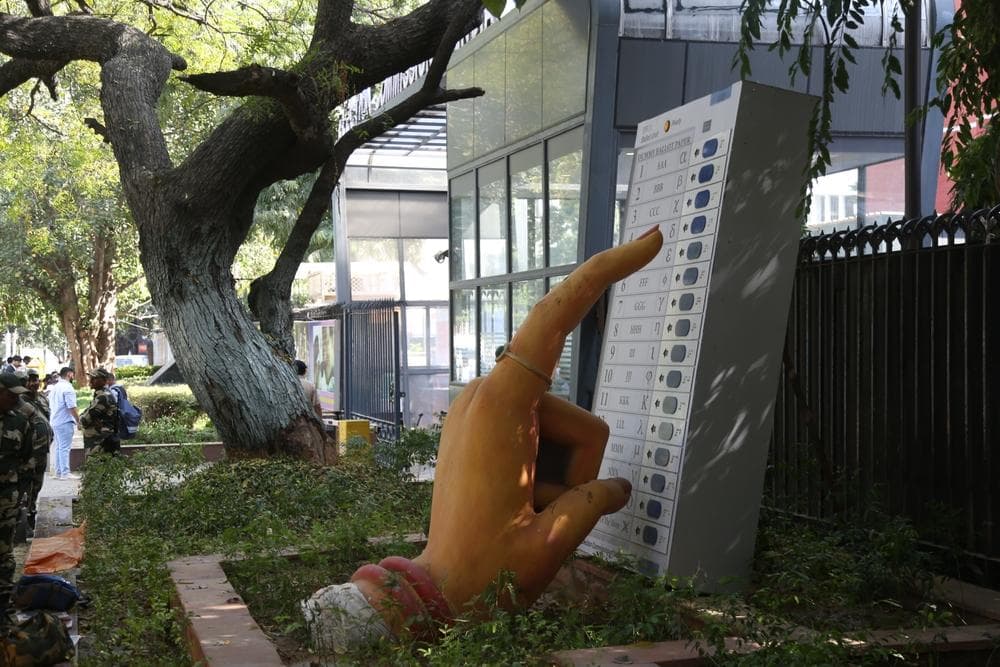
Electoral timing coordination represents a fundamental institutional choice with potentially significant macroeconomic consequences, yet systematic evidence remains limited. This paper exploits variation in India's multi-level electoral system to identify causal effects of synchronized elections on economic growth. Our findings can inform ongoing debates about India's proposed electoral reforms, and are also relevant for broader international debates on political economy determinants of growth in emerging markets and benefits from political unions, specifically, in the case of Europe.
30 January, 2026
Macro & Public Finance • Working Paper
by Dr. Prachi Mishra, Daniel Leigh, Laurence Ball
Why did US inflation rise over 2021-22 and why has it retreated since then? Ball, Leigh, and Mishra (2022), writing near the inflation peak, explained the rise with a framework in which inflation depends on three factors: long-term expectations; the tightness of the labor market as measured by the vacancy-to-unemployment (V/U) ratio; and large changes in relative prices in particular industries such as energy and autos. This paper finds that the same framework explains the retreat in inflation since our earlier work.
17 May, 2025
Macro & Public Finance • Working Paper
by Dr. Prachi Mishra, Abhiman Das, Viral V. Acharya, Nirupama Kulkarni, Nagpurnanand R. Prabhala
We study a bank run in India in which private bank branches experience sudden and considerable loss of deposits, which migrate to state-owned public sector banks (PSBs) that serve as safe havens. We trace the consequences of the deposit reallocation using bank branch-level balance sheet and firm-bank lending data. The flight to safety is not a flight to quality. Lending shrinks and credit quality improves in run banks, but worsens in PSBs receiving the flight-to-safety flows. The reallocation of resources is not efficient in the aggregate.
18 February, 2025
Subscribe to our newsletter
Subscribe to our newsletter
©2024-25 Isaac Centre for Public Policy